
Choosing a quad is a technical decision, not just a purchasing one. In this expert guide, we explain how to analyze...
Latest posts
-
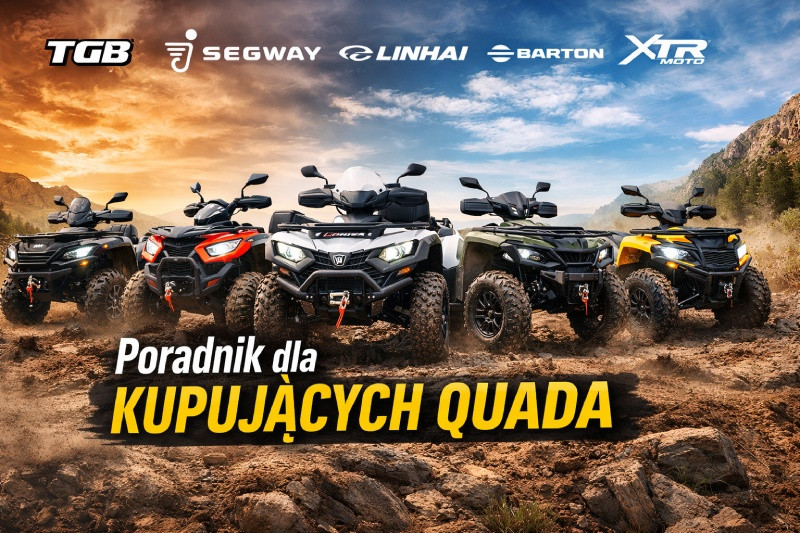 How to Choose an ATV Quad? An Expert Guide for Demanding UsersRead more
 -
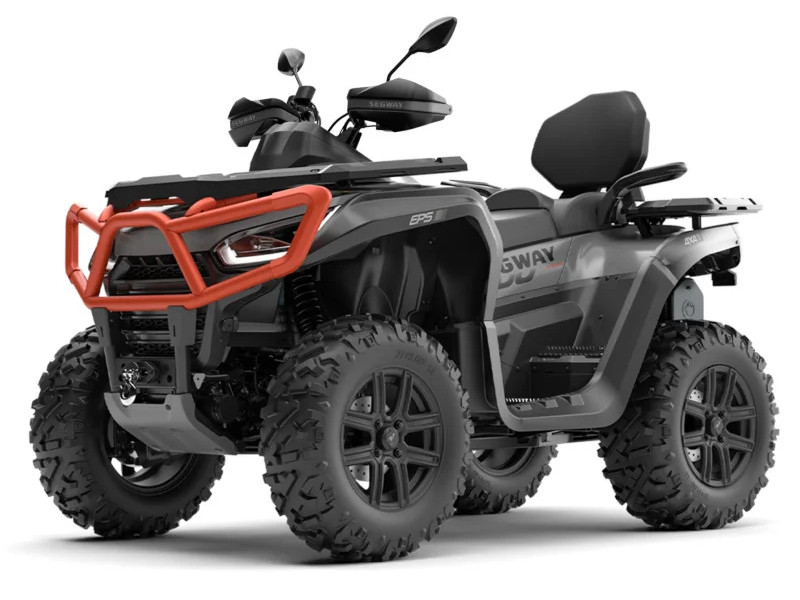 Segway AT10 – a powerful 1000 cc ATV for work and extreme off-road ridingRead more
The Segway AT10 is a powerful 1000 cc ATV with 4x4 drive, EPS, and modern features. Available in several versions (L,...
-
 TGB ATVs – Overview of the Latest Blade 600 and 1000 ModelsRead more
TGB ATVs combine power, modern technology, and comfort across all terrains. Discover the Blade 600 and 1000 models in...
-
 Segway AT5 ATV – Powerful Utility Quad for Work and Off-Road UseRead more
Segway AT5 ATV is a modern 500cc utility quad featuring a powerful 39 HP engine, 4x4 drive and CVTech automatic...
Blog categories
Search in blog
Archived posts

How to Choose an ATV Quad? An Expert Guide for Demanding Users
How to Choose an ATV Quad? An Expert Guide for Demanding Users
Choosing an ATV quad should not start with color, price, or appearance. In practice, it is an engineering decision – involving drivetrain, engine characteristics, suspension, and real off-road capability.
As a user, you need to understand one thing: two quads with the same power can behave completely differently in mud, on rocks, or when carrying a load.
1. Application – the most important factor that eliminates 80% of buying mistakes
Every quad can be assigned to one of four functional categories:
- Utility – work, towing, agriculture, forestry
- Off-road / Extreme – mud, water, extreme terrain
- Universal – a compromise between work and recreation
- Sport – speed, dynamics, lightweight design
The number one mistake: buying a quad based on appearance rather than real use. A utility quad will be inefficient in mud, while a heavy off-road machine may be unnecessary for simple work.
2. Engine – not power, but torque determines off-road performance
In the ATV world, horsepower matters, but it is not the key factor. In terrain, what really matters is torque and its availability at low RPMs.
1000 cc engines, such as those in the Segway AT10, offer not only high power but also instant response in mud and uphill climbs.
In practice:
- small engine = more frequent downshifting and traction loss
- large engine = stable pulling power without performance drops
Modern EFI units (e.g., Bosch) further stabilize performance in changing conditions – water, altitude, temperature.
3. 4x4 drive – not all systems work the same
In theory, every 4x4 quad has four-wheel drive. In practice, the differences are significant:
- simple 4x4 – permanent or manually engaged
- 4x4 with differential lock – full traction in mud
- advanced AWD systems – automatic torque distribution
In premium quads, the key feature is the ability to lock the differential, as it determines whether you get out of a rut or not.
4. Suspension – the most important invisible component
In off-road riding, suspension is more important than power. Why?
Because it keeps the wheels in contact with the ground.
Key parameters:
- suspension travel (the more, the better on uneven terrain)
- shock absorber adjustment (stiffness, rebound)
- type of control arms (standard vs. reinforced A-arms)
In models such as the AT10 WL, extended control arms are used, increasing stability and ground clearance – a real advantage, not marketing.
5. Ground clearance and chassis geometry
Ground clearance is not just a number – it defines real obstacle-crossing capability.
Equally important is the geometry of the lower control arms. In premium designs, they are shaped to reduce the risk of hitting rocks or logs.
This is the difference between “I’ll make it through” and “I’m stuck and damaged the suspension.”
6. EPS – Electric Power Steering
EPS is not a luxury. In modern 800–1000 cc quads, it is a functional standard.
Why?
- reduces arm fatigue
- stabilizes steering in ruts
- improves control with large tires
Without EPS, riding in tough terrain becomes physically limiting after just a few dozen minutes.
7. Tires and rims – real contact with terrain
Tires are the only contact point with the ground – and often the most underestimated component.
Larger wheels (27–30 inches) increase ground clearance and traction, but require a stronger engine and suspension.
Beadlock rims are crucial at low pressure – they prevent the tire from slipping off the rim in mud.
8. Electronics – modern ATVs are no longer just mechanical
Modern quads include systems that directly affect usability:
- riding modes (Eco / Sport / Work)
- ABS (in selected homologations)
- mobile apps
- remote start systems
In practice, electronics determine how aggressive or safe the machine behaves.
9. Quad weight – a frequently ignored factor
Most users focus on power rather than vehicle weight.
This is a mistake because:
- light quad = better maneuverability
- heavy quad = better stability and traction
In muddy terrain, weight often works in favor by pressing tires into the ground.
10. Operation – real ATV ownership costs
A quad is not just a purchase – it is an ongoing cost:
- fuel (depending on engine size and riding style)
- CVT and drivetrain servicing
- tire wear in off-road use
- suspension wear
1000 cc models offer the highest performance but also require conscious usage.
FAQ – most frequently asked questions
Is a 1000 cc quad difficult to ride?
Yes, it requires experience due to very high torque and acceleration.
Does 4x4 always mean good traction?
No – differential lock and tire type are key factors.
Is EPS necessary?
No, but in quads above 700 cc it is practically essential for comfort.
What is more important: power or suspension?
In terrain – suspension. Without it, even a powerful engine cannot transfer traction.
Which tires are best for off-road?
Aggressive 27–30 inch tread patterns matched to quad weight.
Summary
Choosing an ATV quad should be a technical analysis, not an emotional decision. The most important elements are torque, 4x4 drivetrain, suspension, chassis geometry, and tires.
A well-chosen quad does not just “move” – it actively works with the terrain. And that is what separates basic machines from premium-class vehicles.
Posted in:
Default category
Related posts
-
Segway AT5 ATV – Powerful Utility Quad for Work and Off-Road Use
Segway AT5 ATV is a modern 500cc utility quad featuring a powerful 39 HP engine, 4x4 drive and CVTech automatic...Read more
-
TGB ATVs – Overview of the Latest Blade 600 and 1000 Models
TGB ATVs combine power, modern technology, and comfort across all terrains. Discover the Blade 600 and 1000 models in...Read more
-
Segway AT10 – a powerful 1000 cc ATV for work and extreme off-road riding
The Segway AT10 is a powerful 1000 cc ATV with 4x4 drive, EPS, and modern features. Available in several versions (L,...Read more
Leave a comment